Trash
A kind of waste · also called garbage, rubbish, refuse, municipal solid waste, household waste
About
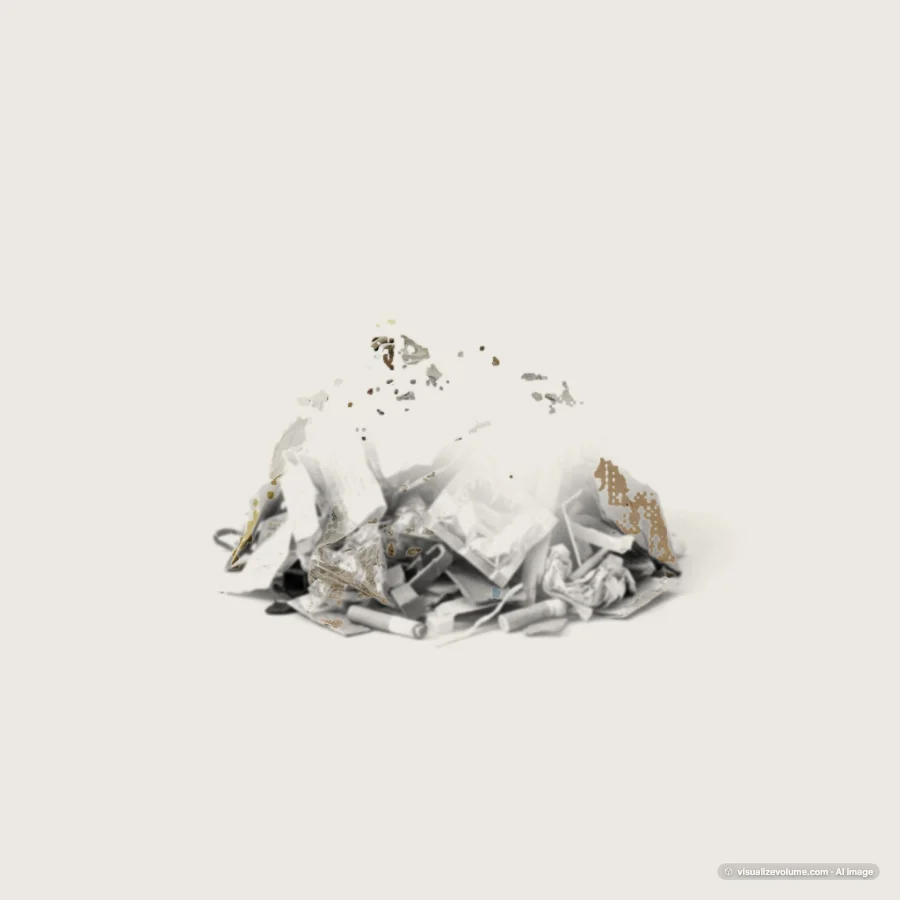
Trash consists of everyday discarded items that take up substantial space despite having a very low bulk density.
Typical uncompacted household trash has a bulk density of about 8.1 pounds per cubic foot (0.13 grams per milliliter). Because loose refuse is packed with hollow containers, crumpled paper, and loose packaging, it holds a large amount of trapped air. Compacting this waste greatly reduces the space it takes up by flattening empty containers and squeezing out pockets of air.
From Wikipedia
Municipal solid waste (MSW), commonly known as trash or garbage in the United States and rubbish in Britain, is a waste type consisting of everyday items that are discarded by the public. "Garbage" can also refer specifically to food waste, as in a garbage disposal; the two are sometimes collected separately. In the European Union, the semantic definition is 'mixed municipal waste,' given waste code 20 03 01 in the European Waste Catalog.
Read more on Wikipedia →Text from Wikipedia’s “Municipal solid waste” article, CC BY-SA 4.0.
Questions people ask
- How much does a cup of trash weigh?
- One US cup of loose trash weighs about 1.1 ounces (31 grams). That makes a full cup of mixed garbage weigh roughly the same as a single slice of bread.
One cup weighs
1.08 oz (30.8 g)
- One tablespoon
- 0.068 oz (1.92 g)
- One teaspoon
- 0.023 oz (641 mg)
- Density
- 0.13 g/mL
Quick answer
One US cup of loose trash weighs about 1.1 ounces (31 grams). That makes a full cup of mixed garbage weigh roughly the same as a single slice of bread.
Typical figures, the same ones every comparison on the site uses; real ones vary.
More like uncompacted trash
Compare it
Next to anything: a person, a car, another waste.